> For the complete documentation index, see [llms.txt](https://docs.copia.io/docs/llms.txt). Markdown versions of documentation pages are available by appending `.md` to page URLs; this page is available as [Markdown](https://docs.copia.io/docs/git-based-source-control/additional-features/topics.md).
# Topics
## Overview
Topics are a feature in the Web App that allow you to associate specific labels with a repository. Topics will allow you to tag, search, and navigate repositories based on a location, purpose, or a separate taxonomy.
Topics have endless use cases and are an extremely powerful organizational tool. Some common implementations of Topics are outlined below:
* **Location:** If an organization has 10 repositories that represent PLC projects for the stamping area in a factory, its users may add a "stamping" topic to each repository. This allows users in that organization to quickly find all repositories that relate to the stamping area in the plant.
* **Version**: If an organization wants to track the version or firmware of a program in a customer repository, its users may add a "V1" topic that reflects the current firmware of the program within that repository. This allows users in that organization to quickly identify which customer repositories have outdated versions.
* **Type**: If an organization wants to efficiently identify all of its repositories that are associated with a specific vendor, its users may add a "Siemens" topic to each repository that contains Step7 TIA Portal projects.
## Adding a Topic
Navigate to the *Files* view in your repository and enable the *Show Topics* toggle near the top of the screen.

You can view, add, and delete topics once the *Show Topics* toggle is enabled. To add a new Topic, enter a Topic name and press the teal *+* icon.

The new Topic will appear as an interactive chip.
{% hint style="info" %}
You can add up to a maximum limit of 25 Topics to a repository
{% endhint %}
## Deleting a Topic
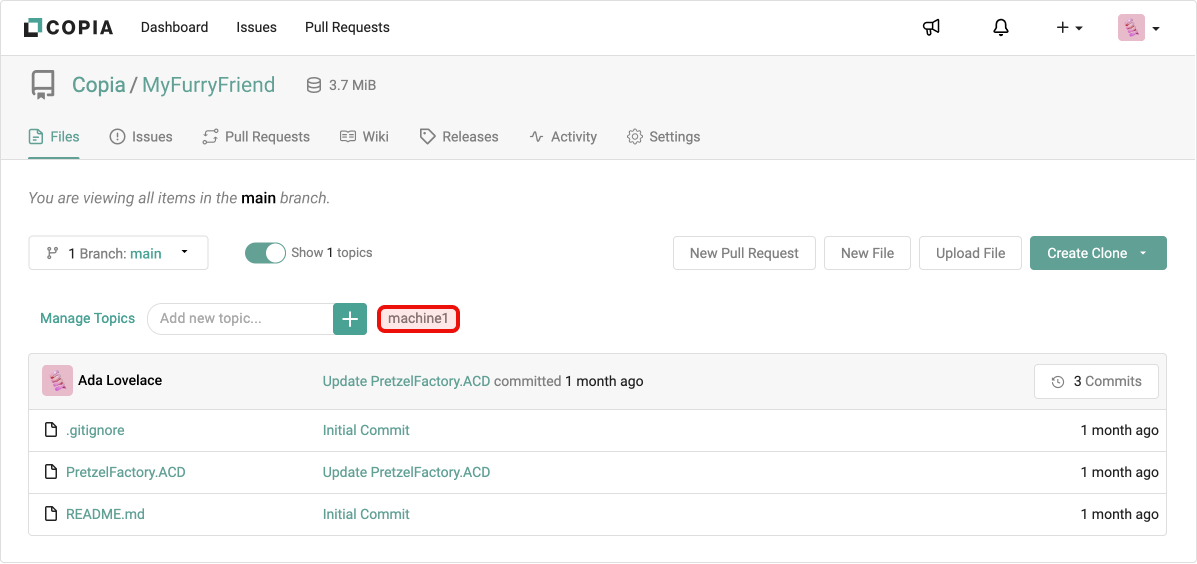
Click on *Manage Topics* to remove a Topic.

Any Topics that are associated with your repository will display in red. Click anywhere on the chip to remove it from the repository.

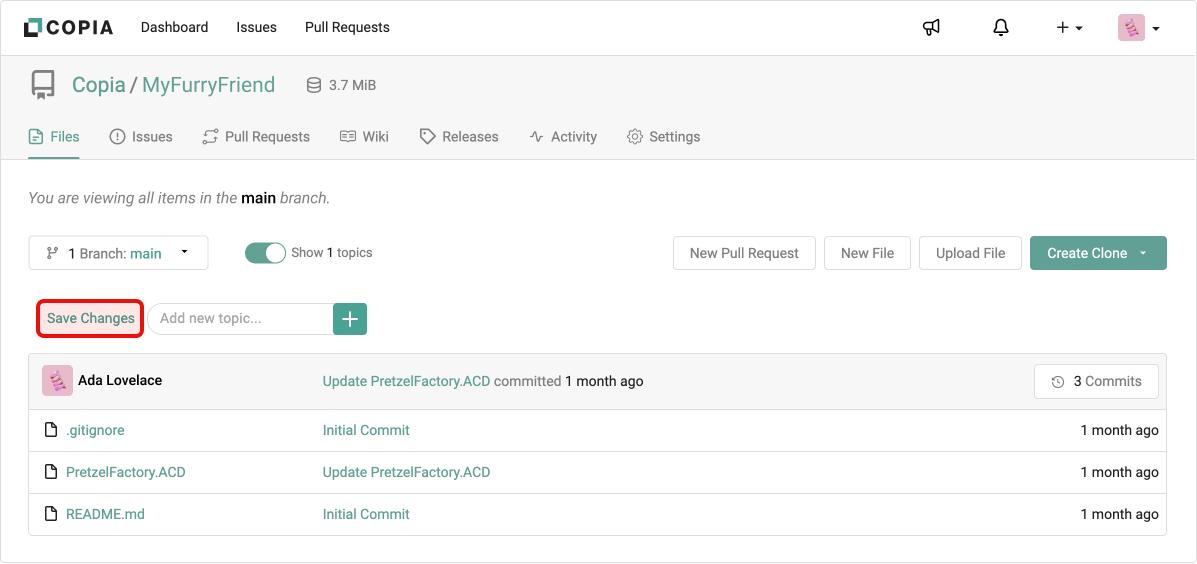
Click the *Save Changes* option to save your work.
## Searching by Topics
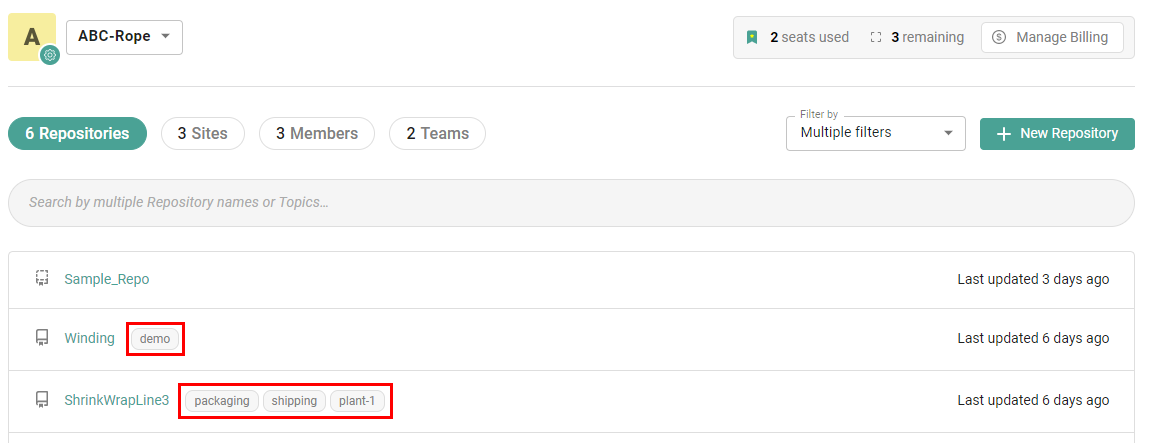
You can use a topic to search for a repository from the *Dashboard*. Select the Repositories tab, and Topics that have been assigned to a repository will be displayed as interactive chips.
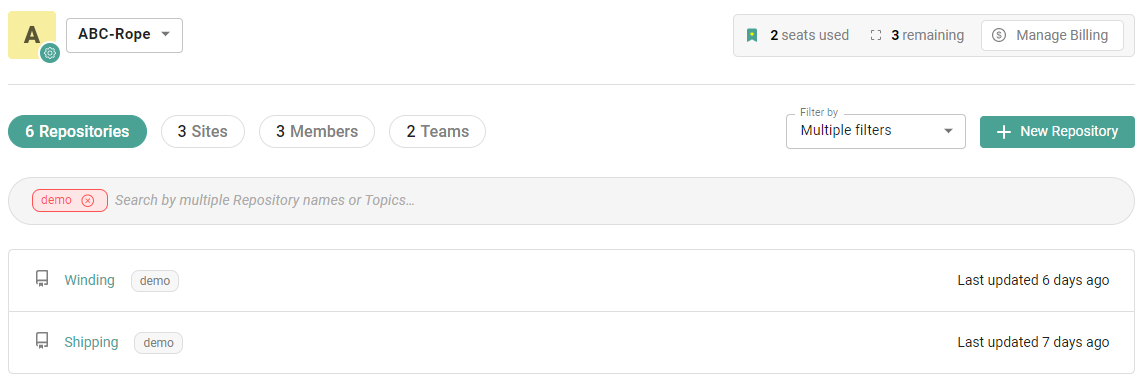
To filter a list of repositories that have been assigned a certain topic, either click on a topic from the repository list or search for a topic by clicking into the *Search for Repositories...* field. The list will display repositories that have the chosen topic assigned to them. You can clear the filter condition by clicking on the red *X* within the active chip.
---
# Agent Instructions
This documentation is published with GitBook. GitBook is the documentation platform designed so that both humans and AI agents can read, navigate, and reason over technical content effectively. Learn more at gitbook.com.
## Querying This Documentation
If you need additional information that is not directly available in this page, you can query the documentation by asking a question.
Perform an HTTP GET request on the following URL with the `ask` and `goal` query parameters:
```
GET https://docs.copia.io/docs/git-based-source-control/additional-features/topics.md?ask=&goal=
```
`ask` is the immediate question: it should be specific, self-contained, and written in natural language.
`goal` is what the user is ultimately trying to achieve, the reason they need the answer. Sharing it helps GitBook give you a better, more relevant answer. A goal is most helpful when it describes the outcome the user wants rather than restating the question. For example, with `ask=how do I create an API token`, a goal like `automate deployments from our CI pipeline` lets GitBook tailor the answer to that use case.
The response will contain a direct answer to the question and relevant excerpts and sources from the documentation.
Use this mechanism when the answer is not explicitly present in the current page, you need clarification or additional context, or you want to retrieve related documentation sections.